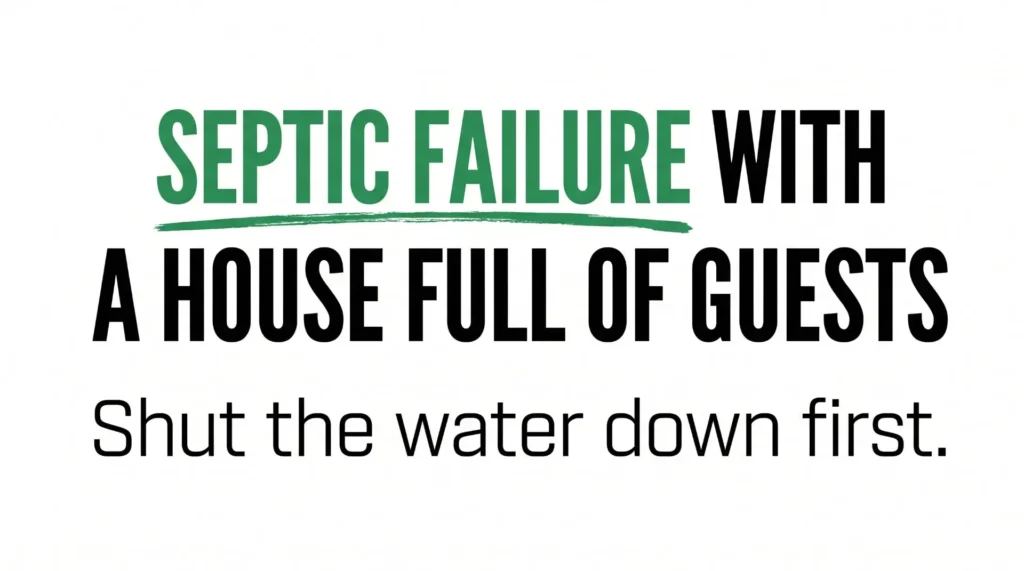
Stopping Water Flow Before Anything Else
- Immediate Water Lockdown: Shut off dishwasher, laundry, and showers instantly to halt incoming hydraulic pressure on an overwhelmed septic tank.
- Identify Hydraulic Saturation: Distinguish between a simple localized mechanical clog and a complete drainfield hydraulic failure caused by high guest volume.
- Deploy Emergency Mitigation: Rely on immediate pumper truck dispatch to pump the working volume rather than dumping harsh biological chemicals into a saturated system.
- Address Central Florida Soil Mechanics: Recognize how Central Florida’s high water tables and sandy soil absorption rates dictate long-term drainfield rehabilitation.
A home packed with fifty holiday guests is every host’s dream until toilets stop flushing, sinks gurgle, and raw sewage backups begin creeping into the ground-floor tubs. When a septic system fails during a major event, the sudden spike in hydraulic loading turns an underlying drainfield degradation into a immediate structural crisis.
Understanding the underlying mechanics of onsite wastewater systems can help you navigate this emergency before permanent damage occurs to your property or surrounding soil.
How to Manage an Immediate Drainfield Failure During High-Occupancy Events
Section Overview: Emergency drainfield failure during high-occupancy events occurs when hydraulic input exceeds the soil’s hourly absorption capacity, forcing wastewater backward into structural plumbing fixtures. Immediate mitigation requires halting internal water usage, directing guests to external facilities, avoiding chemical additives, and scheduling emergency pump-out services to drain the septic tank’s liquid volume and create temporary surge capacity until technical diagnostics can evaluate long-term soil loading rates.
When dozens of guests use the restroom, run faucets, and clear plates in rapid succession, the volumetric inflow rate eclipses the soil absorption rate. In Central Florida, where sandy soils often sit just inches above a seasonally high water table, the drainfield cannot disperse effluent fast enough under sudden surge conditions.
The immediate reaction for many property owners is to pour heavy commercial drain cleaners or biological septic additives down the line. Chemical shock treatments rarely clear a hydraulic backup and often disrupt the beneficial bacterial balance within the tank or break apart settled sludge solids.
Immediate Tactical Steps for Emergency Wastewater Containment
- Institute an Immediate Water Lockout: Turn off all major water-consuming appliances including dishwashers, washing machines, and guest showers. Every gallon entering the tank directly forces a gallon of wastewater upward into the lowest building fixtures.
- Reroute Restroom Usage: Lock interior bathroom doors and rent temporary portable sanitation units or direct guests to nearby facilities to isolate the indoor plumbing system completely.
- Inspect the Effluent Filter: Access the outlet baffle filter if safe access exists, as a hair or solid waste obstruction at the filter can mimic a total drainfield failure by blocking flow out of the tank.
- Avoid Mechanical Snakes in Saturated Lines: Refrain from running heavy cable augers down main drains while the line is submerged in standing sewage, which can puncture compromised pipe walls or pack sludge deeper into the header manifold.
- Schedule Emergency Vacuum Extraction: Contact professional liquid waste haulers to extract liquid effluent directly from the primary and secondary tank compartments, creating 1,000 to 1,500 gallons of temporary storage buffer.
Consider a residential property owner in Winter Park hosting a holiday gathering when toilets suddenly overflow across two ground-floor bathrooms. The owner immediately cuts off main kitchen water lines, halts all dishwashing, and dispatches a vacuum extraction unit. By draining the liquid volume down to the tank floor, the system gains immediate surge capacity, buying time to keep the event safe without risking structural sewage contamination indoors.
Long-Term Septic Repair and Engineering Solutions for Central Florida Soil Mechanics
Section Overview: Resolving chronic drainfield failures in Central Florida requires evaluating soil percolation rates, seasonal high water table elevations, and biomat accumulation at the trench interface. Long-term solutions involve high-pressure hydro-jetting to clear header manifolds, installing aerobic treatment units or advanced chamber drainfields, and complying with Florida Department of Environmental Protection (FDEP) standards to restore sustainable hydraulic loading capacities.
Emergency pumping provides temporary relief, but it does not fix a structurally compromised drainfield. Over years of operation, an anaerobic organic layer known as the biomat forms at the soil-trench interface. While biomat helps filter pathogens, excessive biological buildup slows down soil percolation, causing wastewater to pond inside the absorption field trenches.
Central Florida’s environmental conditions intensify these hydraulic challenges. High seasonal rainfall drives water tables upward, reducing the unsaturating soil layer necessary for effective effluent filtration. When water tables rise, hydraulic head pressure pushes back against the drainfield, leading to recurring system backups during high-use events.
Diagnostic Evaluation and Technical Engineering Solutions
- Comprehensive Video Pipe Inspection: Technicians navigate high-definition cameras through main sewer lines and distribution boxes to verify pipe pitch, locate root intrusions, and inspect baffle wall integrity.
- Hydro-Jetting Manifold Restorations: Utilizing controlled water streams between 1,500 and 3,000 PSI at specific GPM flow rates cleans grease and scale from distribution pipes without damaging delicate clay or plastic lines.
- Soil Profile and Percolation Testing: Soil scientists measure unsaturated sand depth above the seasonal high water table to calculate exact square-footage requirements for replacement drainfield trench systems.
- Aerobic Treatment System Conversion: Upgrading from conventional gravity systems to advanced aerobic treatment units introduces oxygenated processing, accelerating biomat decomposition and improving overall effluent quality.
- Lift Station and Force Main Integration: Installing duplex pump lift stations with level float controls allows wastewater to be elevated to raised mound drainfields when natural soil elevations are insufficient.
In commercial settings, such as an Orlando restaurant managing peak weekend shifts or an apartment complex in Kissimmee dealing with a main sewer surcharge, mechanical failure demands immediate specialized care. For complex infrastructure challenges, leveraging specialized underground utility installation in Orlando guarantees that deep piping, force mains, and gravity mains satisfy strict engineering standards.
Similarly, properties facing recurring high-volume demand require proactive mechanical monitoring. Engaging expert commercial lift station services in Orlando prevents pump air-locking, transducer failure, and float switch corrosion before high-occupancy events strain the system.
Residential systems experiencing chronic sluggishness benefit from full system evaluations. Consulting specialists in septic systems and pumping ensures proper tank sizing, baffle restoration, and long-term soil absorption compliance under Florida Department of Health Onsite Sewage Programs guidelines.
When drainage lines show early warning signs of stress, arranging timely sewer and drain services prevents grease and particulate buildup from prematurely blinding the drainfield aggregate. In severe cases involving severe rainfall or unmanaged effluent surcharges, reviewing dedicated solutions for drains backed up helps property owners implement immediate corrective action.
Proper environmental stewardship requires aligning all onsite wastewater modifications with strict state regulations enforced by the Florida Department of Environmental Protection.
External References
- Florida Department of Health – Onsite Sewage Programs
- Florida Department of Environmental Protection – Wastewater Management
Key Takeaways
- Stop Hydraulic Inflow Immediately: Cease all interior water usage during an active backup to prevent sewage from entering living or commercial spaces.
- Avoid Chemical Additives: Never rely on harsh acid cleaners or biological additives during a hydraulic emergency; mechanical extraction is the only effective short-term fix.
- Understand Soil Limitations: Central Florida’s sandy soils and high water tables severely restrict drainfield absorption capacity during sudden usage spikes.
- Emergency Pumping Is a Temporary Buffer: Pumping a saturated septic tank creates temporary surge capacity but does not repair a clogged or failed drainfield biomat.
- Invest in Engineering Diagnostics: Long-term system performance requires video pipe inspections, hydro-jetting, soil percolation testing, or complete system upgrades.
Contact Lapin Services
Whether you are dealing with an immediate septic backup during a holiday event or managing long-term commercial wastewater infrastructure, Lapin Services provides 24/7 master-licensed expertise across Central Florida. Contact our team today to request emergency vacuum pumping, schedule comprehensive system diagnostics, or discuss sitework utilities by visiting our page to request a project quote.