Article Overview
- Cascade Risk Management: Shared grease interceptor failures in retail strips cause cross-tenant sewage backups, triggering immediate Florida Department of Health shut-down orders across all connected restaurant tenants.
- Hydraulic and Hydro-Jetting Dynamics: Hydraulic overloading occurs when solid FOG (Fats, Oils, and Grease) and heavy biological mats clog shared lateral lines; clearing these obstructions requires high-volume hydro-jetting at precise pressure thresholds (2,000–3,500 PSI at 12–18 GPM) to protect underlying infrastructure.
- Regulatory Compliance: Strict municipal FOG ordinances across Orange and Seminole counties enforce rigid maintenance logs and mandate structural baffle inspections, air-gap verifications, and certified vacuum pump-outs to prevent illegal municipal sewer overflows.
- Rapid Emergency Dispatch: Lapin Services delivers 24/7 master-licensed response—combining triple-licensure in plumbing, septic, and underground utilities—to perform field diagnostics, high-capacity pumper extraction, and trenchless line repairs.
How Shared Retail Grease Line Failures Trigger Multi-Tenant Health Closures
A shared grease interceptor backup in a multi-tenant retail plaza occurs when accumulated Fats, Oils, and Grease (FOG) solidify within a common private collector line, blocking flow and forcing untreated wastewater backward into the lowest floor drains of neighboring restaurant units.
When a 1,500-gallon exterior concrete grease interceptor serving a strip plaza in Winter Park or Kissimmee surcharges, the resulting backup rarely stays confined to a single kitchen. Central Florida commercial plazas frequently utilize continuous, shared underground sanitary and FOG collector laterals. When the main interceptor reaches capacity—or when a downstream line clogs with hardened grease—the hydraulic head pressure forces raw sewage and rancid grease up through floor sinks, mop basins, and dishwashing drains across adjacent leased spaces. Within minutes, a single kitchen’s maintenance oversight threatens every neighboring food service establishment with immediate, mandatory suspension of operations by local health inspectors.
The sequential flow of wastewater through a multi-tenant commercial plaza follow a clear path from individual kitchens to the municipal system, creating several points of potential failure:
- Individual Kitchen Discharges: Multiple independent food service tenants, such as Kitchen A, Kitchen B, and Kitchen C, discharge fats, oils, grease, and wash water from their respective mop sinks, floor drains, and dishwashing stations into dedicated branch lines.
- Confluence into Shared Collector Laterals: These individual branch lines tie directly into a single, shared private collector pipe running beneath the commercial plaza foundation or service corridor.
- Formation of Upstream Line Obstructions: Hardened grease deposits and heavy organic mats accumulate along the interior walls of the shared collector pipe, creating a complete structural blockage that stops forward hydraulic flow.
- Hydraulic Surcharge and Cross-Tenant Backups: Deprived of an outlet to the interceptor, incoming wastewater builds up head pressure within the collector pipe and takes the path of least resistance, backing up into the lowest floor sinks and mop basins of adjacent tenant spaces.
- Interceptor Entry and Final Municipal Discharge: Under normal, unobstructed conditions, wastewater flows from the collector pipe into the primary chamber of the gravity grease interceptor, where grease rises to the top before clarified effluent exits into the public municipal sewer main.
The regulatory consequences of an active grease line surcharge are swift and costly. The Florida Department of Agriculture and Consumer Services (FDACS) and the Florida Department of Health (DOH) maintain strict sanitation codes regarding active wastewater backups. Under state environmental health standards, any commercial food facility experiencing floor drain surcharges or sewage flow back-ups must immediately cease all food preparation activities. A single overflow event can force property managers to face catastrophic operational downtime, thousands of dollars in lost tenant revenue, lease dispute litigation, and severe municipal enforcement actions from regional bodies like the Orange County Environmental Protection Division.
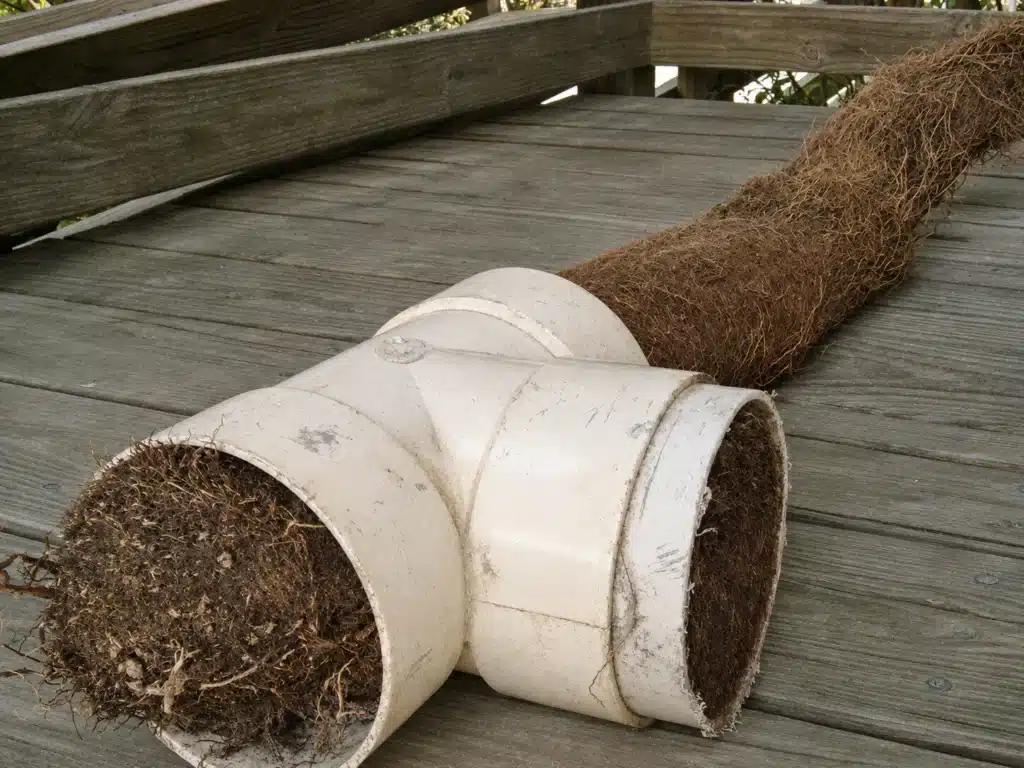
Preventing these cascading closures requires understanding how commercial grease interceptors function within a shared civil utility framework. In multi-tenant retail centers, wastewater from multiple commercial kitchens flows through dedicated interior grease traps or exterior gravity interceptors before discharging into the municipal sewer main. When tenants fail to maintain grease management protocols, FOG accumulates along pipe walls, saponifies into rock-hard deposits, and eventually chokes off the pipe’s internal diameter.
Property managers and facility directors cannot afford to treat grease management as a routine janitorial task. When an emergency surcharge occurs, resolving the crisis demands immediate deployment of advanced diagnostic tools and heavy commercial equipment. Lapin Services leverages triple-license capabilities as a Master Septic Contractor (SM0890812), Certified Plumbing Contractor (CFC1428594), and Underground Utility Contractor (CUC1223686) to quickly isolate private collector lines, execute high-volume waste extraction, and clear lateral obstructions before health officials issue commercial closure orders. For comprehensive emergency support, explore our 24/7 emergency services hub or learn how we handle acute plumbing failures through our dedicated emergency plumbing team.
Technical Emergency Diagnostics and Hydro-Jetting Solutions for Shopping Centers
Resolving a commercial grease interceptor emergency requires field diagnostics using high-definition sewer cameras followed by high-volume hydro-jetting to scour saponified grease deposits from pipe walls without compromising pipe structural integrity.
When responding to an active overflow at a commercial shopping center, technicians must quickly determine whether the obstruction resides within the private building lateral, the primary inlet/outlet baffles of the interceptor, or the municipal utility connection. The diagnostic process begins with a comprehensive optical evaluation using self-leveling inline sewer camera systems equipped with high-frequency sonde transmitters. These radio transmitters allow surface technicians to locate the exact depth and horizontal position of line blockages, structural bellies, crushed pipe sections, or root intrusions hidden beneath concrete parking pads and paved loading zones.
The systematic field diagnostic and jetting methodology follows a rigorous multi-step operational protocol:
- Optical Sonde Location and Mapping: High-definition video pipelines are introduced into access cleanouts to send radio frequencies to surface locators, pinpointing the precise spatial coordinates and depth of line blockages under asphalt or concrete paving.
- Calibrated Pressure Hydro-Jetting Setup: High-volume jetting rigs are connected and adjusted to maintain an operational output of 2,000 to 3,500 PSI at 12 to 18 GPM, matching nozzle propulsion parameters to pipe material tolerances.
- Internal Baffle and Layer Evaluation: Master technicians access the main interceptor vaults to inspect structural inlet and outlet sanitary tees while measuring the vertical thickness of the accumulated floating grease mat and settled bottom sludge layer.
- Mechanical Scouring and Waste Extraction: Rear-facing rotational nozzles score hardened saponification deposits off interior pipe walls, flushing suspended grease solids downstream directly into high-capacity vacuum tankers for safe extraction.
Clearing heavy commercial grease blockages requires specialized thermal and mechanical force. Standard plumbing snakes merely punch narrow holes through soft grease, leaving thick sidewall build-ups that cause lines to reclear within days. Instead, commercial field teams utilize heavy-duty hydro-jetting equipment calibrated to precise pressure and volume ratios. For vintage cast iron or terra cotta sewer pipe commonly found in older Central Florida plazas, hydro-jetters operate within a controlled window of 2,000 to 3,500 PSI at a flow rate of 12 to 18 Gallons Per Minute (GPM). This high water volume is essential: while PSI cuts and breaks up hardened grease layers, high GPM provides the mass movement needed to flush heavy suspended solids completely out of the pipe lateral and into the interceptor chamber for extraction.
The mechanical operation of a standard gravity grease interceptor relies on distinct density zones inside the concrete underground tank:
- Inlet Flow Phase: Hot, greasy wastewater enters the primary compartment through an inlet sanitary tee designed to dissipate fluid velocity and prevent liquid turbulence.
- Floating FOG Mat Accumulation: Lower-density fats, oils, and greases naturally float to the top of the water column, forming a concentrated upper grease mat that thickens over time.
- Clarified Mid-Water Separation Zone: Sandwiched between the floating top layer and the bottom sediment, a clarified water zone develops where suspended solids settle out and free grease rises.
- Settled Solids Layer: Dense food particulates, heavy debris, and organic sediment sink to the floor of the tank, forming an accumulating bottom sludge layer.
- Outlet Effluent Discharge: A submerged outlet sanitary tee draws exclusively from the clarified mid-water zone, discharging compliant wastewater into the municipal sanitary sewer system.
- Inlet and Outlet Baffle Structural Inspections: Damaged, missing, or corroded sanitary tees and baffles allow floating grease mats to short-circuit the interceptor, passing raw FOG directly into downstream drainage pipes or municipal mains.
- Saponification Layer Breakdown: When animal fats mix with alkaline cleaning chemicals in hot kitchen drain lines, they undergo saponification, forming hard, soap-like concrete masses that require specialized rear-facing rotational nozzle attachments to break apart.
- High Water Table Hydraulic Interferences: High groundwater tables across Orlando, Lake Mary, and Sanford place constant external hydrostatic pressure on underground concrete tanks, increasing the risk of groundwater infiltration through cracked seams or deteriorated pipe penetrations.
- Bypass Pumping Protocol Implementation: During emergency lateral jetting or structural tank repairs, technicians establish temporary high-capacity bypass pumping systems to allow uninvolved tenant spaces to stay open without risking indoor sewage spills.
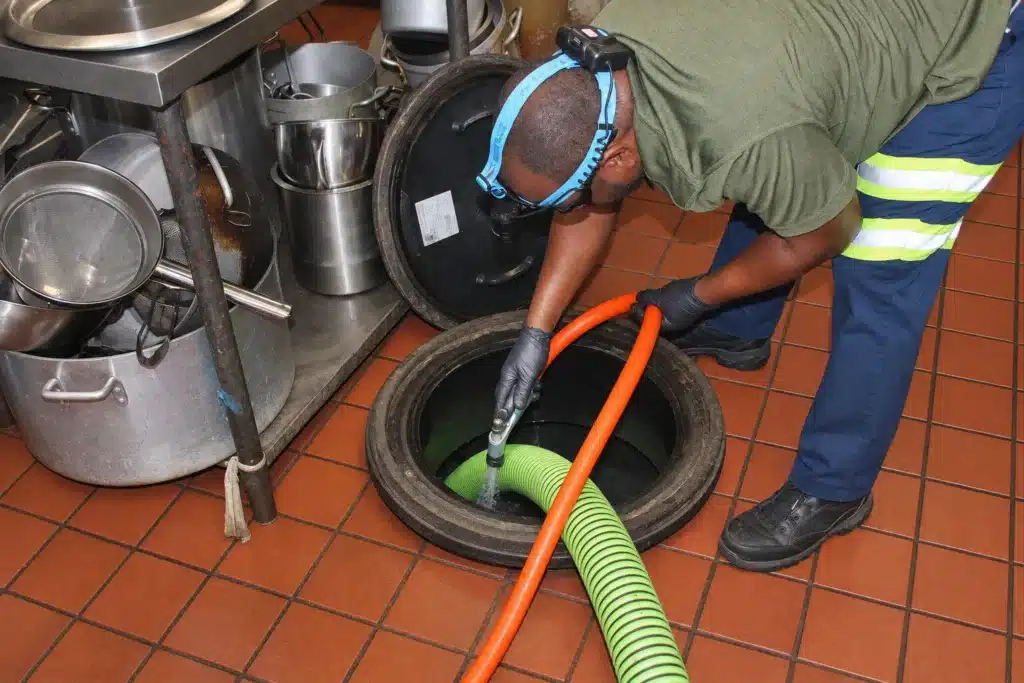
Maintaining continuous compliance with local environmental utilities—such as the City of Orlando Wastewater Division or Seminole County Environmental Services—requires strictly adhering to FOG control regulations. Commercial grease traps and gravity interceptors must undergo routine vacuum pumping whenever the combined floatable FOG layer and settled sludge layer exceed 25% of the liquid capacity of the tank. Allowing interceptors to surpass this threshold pushes greasy effluent into downstream municipal lines, triggering severe administrative fines, mandatory utility surcharges, and potential civil liability for public utility damage. Property directors managing complex retail environments can streamline their routine code compliance by partnering with experienced specialists through our commercial grease trap services in Orlando and establishing tailored routine service agreements through our commercial maintenance programs.
Overcoming Complex Civil Utility and Lift Station Failures in Commercial Plazas
When shopping plazas rely on commercial lift stations to pump wastewater to elevated municipal mains, pump failure or control panel faults can trigger rapid plaza-wide sewage backups that require immediate civil utility repairs.
In many Central Florida commercial developments, gravity drainage is insufficient to transport heavy wastewater flows to distant municipal utility connections. These facilities depend on package lift stations—engineered underground wet wells equipped with heavy-duty submersible solids-handling pumps, float switch trees, or continuous ultrasonic level transducers. If a commercial lift station suffers an electrical phase failure, a bound impellor caused by non-dispersible wipes, or a float tree tangle, incoming wastewater rapidly fills the wet well. Once the well surcharges, upstream commercial grease lines and sanitary laterals lock up, causing immediate wastewater backups across connected commercial kitchens and customer restrooms.
A commercial lift station functions as an integrated mechanical and electrical system configured with specific functional controls within the wet well chamber:
- Inflow Lateral Reception: Gravity-fed wastewater from commercial kitchen grease interceptors and tenant restrooms enters the concrete wet well through a main sewer influent pipe.
- Off Level Float Control: The lowest float switch sets the baseline shut-off point, ensuring submersible pumps remain submerged to prevent motor overheating while preventing the well from pumping completely dry.
- Lead Pump Float Engagement: As liquid levels rise to a predetermined threshold, the lead pump float signals the control panel to activate the primary submersible pump to discharge wastewater into the pressurized force main.
- Lag Pump Float Engagement: If incoming wastewater volume exceeds the capacity of the primary pump, the water level rises to activate the lag pump float, engaging both submersible pumps simultaneously to handle peak flow conditions.
- High Water Alarm Float Trigger: Should liquid levels breach safe operating limits due to pump failure, clog, or power loss, the top float triggers an immediate high-water alarm featuring visual strobes, audible horns, and telemetry alerts sent directly to facility management.
- Pressurized Force Main Discharge: Submersible solids-handling pumps push wastewater up through heavy-duty check valves and gate valves into the municipal force main located in the public utility right-of-way.
Managing lift station emergencies requires extensive expertise in mechanical hydraulics, industrial electrical controls, and heavy civil utility engineering. Duplex pump control panels utilize alternating relays to balance runtime between primary and secondary pumps. When liquid levels reach critical heights, both pumps engage while activating audible and visual high-water alarm beacons. If grease builds up inside the wet well, it can coat float switches with a thick insulating layer, trapping floats in an “off” position even as wastewater rises. Technicians must conduct emergency float degreasing, test motor winding resistance using megohmmeters, measure running amperage against nameplate ratings, and clear bound pump impellers to restore operational capacity to the force main.
- Duplex Submersible Pump Checks: Testing electrical continuity, capacitor health, seal leak sensors, and impeller clearances ensures dual pumps alternate reliably under heavy peak kitchen discharges.
- Transducer and Float Logic Calibrations: Removing heavy grease coatings from level-sensing hardware prevents false control signals that lead to dry-running pump motor burnouts or catastrophic wet well overflows.
- Force Main Check Valve Maintenance: Inspecting heavy-duty swing check valves prevents pumped wastewater inside the pressurized force main from flowing backward into the wet well when pumps cycle off.
- Emergency Vacuum Tanker Extraction: Deploying high-capacity vacuum tankers to perform continuous pump-offs keeps tenant drain lines clear while technicians perform electrical, mechanical, or structural lift station overhauls.
For property directors facing structural line collapse, broken force mains, or severe lift station failures, standard maintenance providers often lack the heavy equipment and licensing needed to execute underground site repairs. Lapin Services bridges this gap by combining internal engineering diagnostics with full excavation capabilities. As a fully licensed utility contractor, our teams execute deep underground excavation, trenchless pipe lining, and full utility replacements without the delays of subcontracting out heavy sitework. Commercial asset owners can read more about our tailored solutions on our dedicated page for property managers, review our civil capabilities under underground utility repair in Orlando, or secure ongoing system reliability by establishing customized maintenance plans.
For full details on environmental compliance, utility licensing, and technical diagnostic standards, visit the Florida Department of Environmental Protection and review the EPA Clean Water Guidelines.
Key Takeaways
- Multi-Tenant Vulnerability: Shared grease collector lines in retail plazas create single-point-of-failure risks where one tenant’s neglected interceptor can trigger multi-business health department closures.
- Advanced Clearing Protocols: Mechanical snaking is insufficient for heavy grease blockages; proper restoration requires high-definition camera diagnostics alongside controlled hydro-jetting (2,000–3,500 PSI at 12–18 GPM).
- Strict Regulatory Compliance: Municipal FOG laws enforce the 25% rule for grease and solids accumulation; exceeding this threshold leads to severe environmental fines and public sewer damage.
- Integrated Lift Station Maintenance: Commercial lift station backups are commonly caused by grease-fouled float switches or bound pump impellers, requiring skilled electrical, mechanical, and hydraulic diagnostics.
- Comprehensive Utility Capability: Resolving severe commercial wastewater emergencies demands a triple-licensed contractor capable of executing everything from indoor plumbing repairs to deep underground utility sitework.
When a grease interceptor failure or sewer line blockage threatens your commercial property with emergency closures, tenant disputes, or environmental fines, you need an experienced partner who can resolve the issue immediately. Lapin Services brings over six decades of dedicated Central Florida experience, offering master-licensed expertise across plumbing, septic, lift station, and underground civil utility engineering. Our emergency response crews operate 24 hours a day, 7 days a week, equipped with state-of-the-art diagnostic cameras, high-capacity vacuum tankers, and powerful hydro-jetting units to restore your operations without costly delays. Protect your investment, safeguard your tenants, and ensure absolute regulatory compliance by contacting our commercial service specialists today. Call Lapin Services at (407) 326-3367 or visit our Request a Project Quote page to schedule immediate emergency service or establish a comprehensive commercial maintenance plan.