Diagnosing a Sudden Loss of Supply Pressure
- Mechanical & Municipal Causes: Sudden commercial water pressure drops are typically driven by tripped backflow preventers, municipal supply fluctuations, collapsed underground mains, or failed pressure reducing valves (PRVs).
- Florida Environmental Vulnerabilities: Central Florida’s high water table, sandy soils, and severe weather cause rapid underground pipe shifts, soil erosion, and severe mechanical stress on commercial plumbing assemblies.
- Engineering-Driven Diagnostics: Identifying the root cause requires precision hydrostatic testing, video pipe inspections, and systematic isolation of local facility components versus municipal infrastructure.
- Proactive Mitigation: Immediate commercial intervention prevents costly business downtime, structural water damage, health code violations, and catastrophic underground utility failures.
What Causes Sudden Loss of Water Pressure Across a Commercial Facility?
A multi-story office building in Orlando or a busy commercial kitchen in Winter Park cannot function without consistent hydraulic head. When a facility suffers a sudden drop in commercial water pressure, standard operations grind to an abrupt halt. Restrooms fail to flush, cooling towers lose critical makeup water, commercial dishwashers trip thermal safety shutoffs, and life-safety fire suppression systems can lose regulatory compliance in seconds.
Understanding the mechanics behind immediate, site-wide hydraulic failure requires looking past simple fixture clogs. It demands an engineering-grade evaluation of high-flow commercial supply infrastructure, municipal connections, pressure-regulating assemblies, and Central Florida’s unique sub-surface environment.
An unmitigated loss of domestic water pressure is rarely an isolated inconvenience—it is frequently the first warning sign of a major structural, mechanical, or municipal emergency.
The commercial hydraulic supply pipeline follows a precise sequence to safely transfer municipal water into functional building distribution lines:
- Municipal Supply Main: Delivers high-volume, untreated municipal water from regional distribution grids under high baseline pressures.
- Master Meter and Emergency Shutoff: Measures volumetric consumption and serves as the primary manual isolation point for property utility feeds.
- Backflow Preventer Assembly: Prevents contaminated water from siphoning backward from the facility into the public water supply.
- Pressure Reducing Valve (PRV) Assembly: Steps down high municipal street pressures into safe, operating ranges for internal commercial appliances and fixtures.
- Commercial Booster Pump Package: Re-pressurizes water delivery across multi-story vertical risers and distant facility wings.
- Facility Outlets and Fixtures: Supplies end-point fixtures, commercial kitchens, cooling infrastructure, and domestic sanitation lines.
Mechanical, Hydraulic, and Underground Causes of Instant Pressure Losses
Section Overview: A sudden drop in commercial water pressure across a facility is primarily caused by tripped or closed backflow preventer assemblies, failed Pressure Reducing Valves (PRVs), subterranean water main ruptures, or municipal utility supply drops. Central Florida’s unstable sandy soils, high water tables, and severe weather further exacerbate these mechanical failures through pipe shifting and underground joint separation.
When a multi-tenant retail complex, hospital, or industrial facility experiences a total or dramatic loss of water pressure, the failure point resides within the high-volume distribution network. Identifying whether the drop stems from an internal mechanical failure or an external utility issue requires inspecting four critical failure vectors.
Tripped or Closed Backflow Preventer Assemblies
Backflow preventers—specifically Reduced Pressure Zone (RPZ) devices required across Florida commercial properties—are designed to protect the public water supply from cross-contamination. If a sudden pressure drop occurs upstream on the municipal side, or if a severe pressure spike occurs downstream within the building, the RPZ internal relief valve dumps water to atmosphere and seals off flow.
Furthermore, if an unauthorized individual tampers with the double-check valve assembly or if an internal check valve seat fails due to debris, the device can shut off or severely restrict water delivery. If your property manager notices water actively discharging from the backflow relief port alongside a sudden drop in pressure, the RPZ assembly has triggered its hydraulic safety protocol.
Failed Commercial Pressure Reducing Valves (PRVs)
Most municipal water supply mains deliver water at elevated pressures (often 80 to 110+ PSI) to navigate regional distribution networks. Because internal commercial fixtures, boilers, and appliances are rated for 50 to 70 PSI, facility lines utilize commercial-grade Pressure Reducing Valves (PRVs).
PRVs utilize internal diaphragms, springs, and hydraulic pilots to modulate incoming pressure. When a PRV diaphragm ruptures, scales over from hard water deposits, or suffers a mechanical spring fracture, it can fail in a closed position. This instantly chokes off fluid volume, resulting in an immediate drop in working pressure throughout the entire facility.
Underground Main Line Ruptures and Soil Shifting
Central Florida sits atop a complex karst topography characterized by loose, sandy soils and extremely high water tables. Subterranean distribution mains—whether constructed of ductile iron, PVC, or vintage transite—are under continuous hydraulic strain. Heavy traffic loads in commercial parking garages, soil subsidence, or nearby sitework can cause underground mains to flex, shear, or blow out at mechanical joint fittings.
A catastrophic subterranean main line leak acts as an immediate hydraulic sink. Thousands of gallons of water discharge into the surrounding subsoil every hour, bleeding off velocity and system head before the water ever reaches the building’s interior shutoff valves. If your site displays unexplained wet patches on asphalt, sudden ground settling, or standing water near parking lots, an underground utility blowout is actively occurring.
Municipal Utility Drops, Main Breaks, and Fire Flow Demands
Not every pressure drop originates within your property lines. Municipal supply main breaks, nearby fire department hydrants pulling high-volume flows during emergencies, or routine utility flushing programs by municipal water departments in Orange or Seminole County can temporarily collapse line pressure.
Before initiating invasive plumbing diagnostics inside the building, civil site operators must verify whether neighboring properties are experiencing identical pressure drops or if local water utilities have issued low-pressure or boil-water advisories due to off-site main line breaches.
Primary Failure Mechanisms Across Commercial Supply Components
- RPZ Backflow Preventer Assemblies: The internal differential relief valve dumps water directly to the atmosphere to prevent cross-contamination, or internal check valve seats become jammed by dislodged scale and municipal pipe debris.
- Pressure Reducing Valves (PRVs): Internal elastomer diaphragms tear, spring mechanisms experience fatigue, or mineral scaling freezes the valve stem in a closed or severely restricted position.
- Underground Distribution Mains: Unstable, sandy Florida subsoil shifts beneath parking structures and access roads, leading to longitudinal pipe cracking, sheared mechanical joints, or joint ring blowouts under high traffic vibration.
- Commercial Booster Pump Skids: Electrical control panels trip under thermal strain, mechanical float switches jam, suction transducers fail, or Variable Frequency Drives (VFDs) lock out due to power surges.
Counterintuitive Hydraulic Insight: The High Water Table Trap
A common misconception among facility directors is that underground pipe leaks always manifest as surface water or visible flooding. In Central Florida’s coastal and low-lying inland plains, high water tables and highly permeable sandy subsoils create a natural drainage path.
A major underground supply line failure under a commercial parking lot can discharge up to 200 gallons per minute directly into underlying sand channels or surrounding storm sewers without ever rising to the surface asphalt. Facility managers often waste critical hours adjusting internal PRVs or checking indoor fixtures for clogs while hundreds of thousands of gallons of pressurized water wash away underground site stabilization materials, creating massive sub-surface voids and sudden sinkhole hazards.
For properties experiencing unexplained pressure drops alongside localized sewer gas odorship or slow drainage, utilizing advanced Sewer & Drain Services alongside precision water line acoustics is essential to rule out cross-system utility compromises.
Critical Operational Scenarios in the Field
- Multi-Family Apartment Complexes: A multi-story complex in Kissimmee suffers an immediate loss of water on upper floors. While lower levels retain minimal flow, upper units have zero pressure. The root cause is frequently a failed variable frequency drive (VFD) or control float on the building’s booster pump package, compounded by an improperly set thermal expansion valve on the central domestic hot water system.
- Commercial Kitchens and Restaurants: During a Friday night dinner rush in downtown Orlando, a restaurant experiences an abrupt drop in water supply pressure, stopping dishwashing lines and ice makers. Emergency diagnostics often reveal a sudden trip of the master backflow assembly caused by a thermal back-pressure surge from rapid water heater recovery, or a clogged commercial strainer basket choked with scale and municipal sediment.
- Commercial Facilities & Business Parks: An office park in Lake Mary experiences site-wide pressure drops following routine landscaping excavation. The cause is an unmapped 3-inch PVC main line sheared by heavy equipment, where escaping high-pressure water undermines nearby parking stalls and drains the facility’s available fire flow capacity.
Whether managing an emergency main blowout or diagnosing complex booster pump dynamics, partnering with licensed engineering specialists like Lapin Services ensures rapid, code-compliant resolution.
Technical Diagnostics, Environmental Risk, and Engineering Solutions
Section Overview: Diagnosing site-wide commercial water pressure drops requires systematic pressure isolation testing, acoustic leak detection, and electronic pipe location. Resolving these failures involves resetting or repairing RPZ backflow preventers, rebuilding or replacing scaled Pressure Reducing Valves, repairing damaged underground utility mains, or upgrading booster pump variable frequency drives (VFDs) to match facility demand.
Resolving a sudden drop in commercial water pressure requires a structured diagnostic protocol. Guesswork leads to prolonged facility downtime, tenant displacement, and wasted capital expenditure.
Step-by-Step Commercial Diagnostic Workflow
To pinpoint the exact failure location across a commercial property, civil utility specialists and master plumbers execute a systematic diagnostic process:
- Verify Municipal Meter Status and Static Line Pressure: Install calibrated test gauges on ports immediately downstream of the municipal water meter to record static and dynamic pressures. If baseline supply pressure at the meter falls below regional utility parameters, responsibility resides with the municipal water department.
- Inspect Backflow Assembly Integrity: Check the RPZ relief port for continuous environmental water discharge. Verify that shutoff valves are secured open and that tamper switches have not been engaged. Test pressure differentials across internal check valves using certified backflow test equipment.
- Evaluate Pressure Reducing Valve (PRV) Performance: Measure pressure differentials across the PRV under static (zero flow) and dynamic (maximum demand) conditions. A drastic drop in dynamic pressure while static pressure remains stable confirms a restricted orifice, torn diaphragm, or seized valve stem.
- Conduct Sub-Surface Acoustic Leak Detection: If mechanical room isolation shows no internal faults, employ digital correlation acoustic leak detectors and ground microphones along the path of subterranean service mains. This pinpoints underground pipe blowouts beneath asphalt, concrete, or soil without non-essential site excavation.
- Inspect Booster Pump Skid Controls: For high-rise and multi-story structures, analyze the booster pump control panel, VFD fault logs, pressure transducers, and mechanical isolation valves to ensure pump impellers are delivering design-specified head pressure.
Navigating Florida Environmental & Regulatory Compliance
Remediating commercial utility supply failures requires strict adherence to state and local environmental codes. In Florida, commercial plumbing systems operate under rigorous regulatory oversight:
- FDEP (Florida Department of Environmental Protection) Regulations: Underground main repairs and cross-connection controls must meet FDEP drinking water protection standards. Any repair that compromises supply line integrity requires proper chlorination, pressure testing, and bacteriological clearance before returning the utility line to service.
- Florida Department of Health (DOH) & County Rules: In properties utilizing combined infrastructure or specialized waste management systems—such as commercial food prep venues with specialized Commercial Grease Trap Services (Orlando) or sites relying on high-capacity Septic Systems & Pumping—maintaining positive domestic water pressure is a mandatory health code requirement. Loss of positive water pressure can draw contaminants into supply lines, requiring immediate health department notification and emergency remediation.
- Local Municipal FOG & Utility Codes: Municipalities like Orange County and Seminole County enforce strict cross-connection control programs. Commercial facility managers who fail to maintain, annually test, or properly repair backflow preventer assemblies risk immediate utility shutoff and steep non-compliance fines.
Advanced Mechanical Solutions: Hydro-Jetting vs. Line Excavation
When pressure drops stem from severe internal scaling, tuberculation, or sediment accumulation within legacy metallic supply mains or associated commercial drainage loops, mechanical cleaning methods must be evaluated carefully.
- Hydro-Jetting Hydraulics: Utilizing high-GPM, precision-regulated hydro-jetting equipment can clear severe mineral scaling, heavy bio-deposits, and debris from heavy-wall supply lines or secondary utility conduits. However, hydro-jetting PSI tolerances must be calibrated to the specific piping material. Operating at excessive pressures on aging cast iron or compromised galvanized lines can cause catastrophic structural failure.
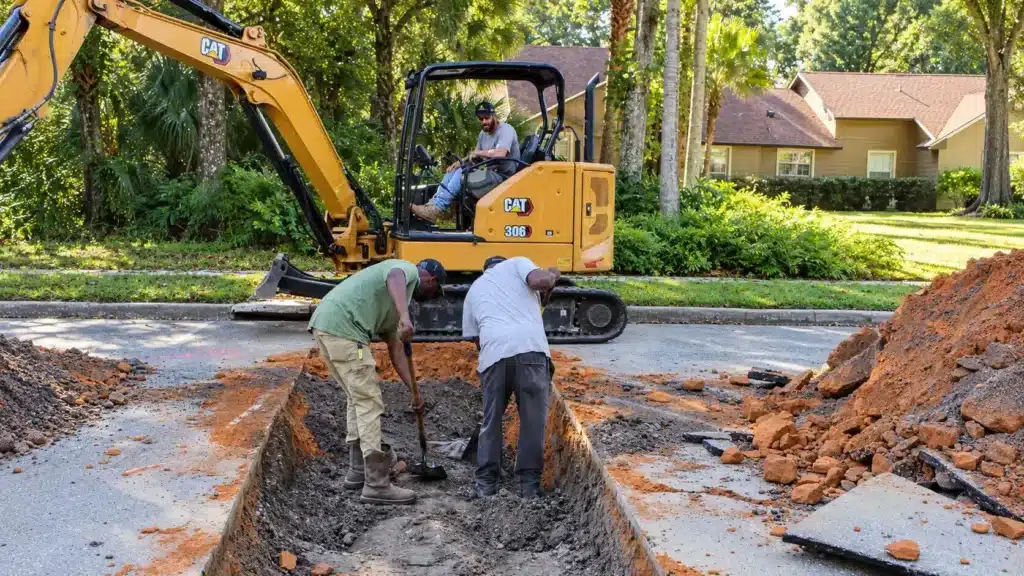
- Trenchless Pipe Repair vs. Excavation: When an underground main line under a commercial parking lot suffers joint failure, trenchless pipe lining or directional drilling offers a rapid solution that preserves surface infrastructure. However, if severe soil washing has undermined the pipe bedding, traditional open-cut utility excavation via licensed Underground Utility Repair (Orlando) contractors is mandatory to restore structural soil density and ensure proper pipe bedding.
Detailed Engineering Tradeoffs: Trenchless Rehabilitation vs. Open-Cut Excavation
Surface and Structural Impact
- Trenchless Pipe Rehabilitation: Involves minimal surface disruption limited strictly to localized access pits, preserving overhead parking structures, heavy drive aisles, and established landscaping.
- Open-Cut Main Excavation: Requires high surface disruption with extensive asphalt cutting, concrete removal, trench shoring, and subsequent repaving operations.
Operational Execution Speed
- Trenchless Pipe Rehabilitation: Typically completed in 12 to 24 hours, dramatically minimizing commercial facility downtime and traffic disruption.
- Open-Cut Main Excavation: Requires 2 to 5 days of intensive field labor, heavy machinery deployment, and site restoration workflows.
Subsoil and Bedding Restoration
- Trenchless Pipe Rehabilitation: Relies entirely on the existing subsoil matrix and surrounding pipe envelope, which may prove inadequate if massive soil erosion has occurred.
- Open-Cut Main Excavation: Allows civil engineering crews to physically remove washed-out soil, backfill with compacted structural aggregate, and re-establish engineered pipe bedding stability.
Capital Cost and Resource Allocation
- Trenchless Pipe Rehabilitation: Incurs higher specialized technology equipment costs, offset by near-zero surface restoration and repaving expenditures.
- Open-Cut Main Excavation: Features lower raw pipe and fitting material costs, but incurs significantly higher surface demolition, site restoration, and asphalt paving fees.
Strategic Risk Mitigation for Facility Owners
Property managers, facility directors, and developers can prevent catastrophic water pressure failures through proactive facility management:
- Establish Routine PRV & Backflow Maintenance: Schedule semi-annual mechanical inspections and annual certified testing of all master backflow preventers and pressure reducing valves to catch diaphragm fatigue before total failure occurs.
- Implement Integrated Utility Monitoring: Install digital pressure transducers with automated building management system (BMS) alarms. Early alerts for minor pressure drops allow maintenance teams to address developing leaks before they cause complete loss of site pressure.
- Enroll in Commercial Preventative Programs: Partnering with qualified utility engineering providers through specialized Commercial Maintenance Programs ensures immediate priority response when emergency main breaks, lift station failures, or site-wide pressure drops occur.
When a sudden drop in commercial water pressure threatens your business continuity, tenant safety, or structural site integrity, immediate intervention from triple-licensed experts is essential. Contact Lapin Services for comprehensive diagnostic, mechanical, and underground utility support.
Key Takeaways
- Primary Causes: Sudden site-wide pressure loss is typically caused by tripped backflow assemblies (RPZs), failed pressure reducing valves (PRVs), subterranean supply main ruptures, or municipal line drops.
- Florida Environmental Risks: Central Florida’s high water table and sandy soil allow massive underground main leaks to drain away sub-surface bedding without surfacing, creating immediate structural sinkhole hazards under parking areas.
- Mechanical Failure Points: PRV diaphragm tears and backflow check valve fouling are the leading internal causes of immediate hydraulic head collapse in commercial structures.
- Diagnostic Protocol: A technical workflow incorporating dynamic pressure gauge testing, backflow differential analysis, and acoustic subterranean leak detection is required to isolate supply failures without unneeded destructive digging.
- Regulatory Compliance: Pressure failures can trigger cross-contamination risks governed by FDEP, DOH, and local municipal utility codes, requiring certified master contractors for compliant mechanical repair and line disinfection.
External References
- Florida Department of Environmental Protection (FDEP) – Drinking Water Program
- U.S. Environmental Protection Agency (EPA) – Ground Water and Drinking Water
- American Society of Plumbing Engineers (ASPE)
Request Emergency Commercial Utility & Plumbing Support
A sudden loss of water pressure across your commercial property demands immediate action from proven civil utility and master plumbing professionals. Lapin Services brings over six decades of Central Florida engineering excellence, backed by our master licenses in plumbing, septic, and underground utility contracting. Whether you require emergency acoustic leak detection, complex PRV rebuilds, backflow remediation, or deep site main repairs, our team is standing by 24/7/365 to restore your facility’s hydraulic integrity.
Contact our commercial dispatch team today at (407) 326-3367 or visit our Request a Project Quote portal to schedule an immediate field diagnostic inspection.