
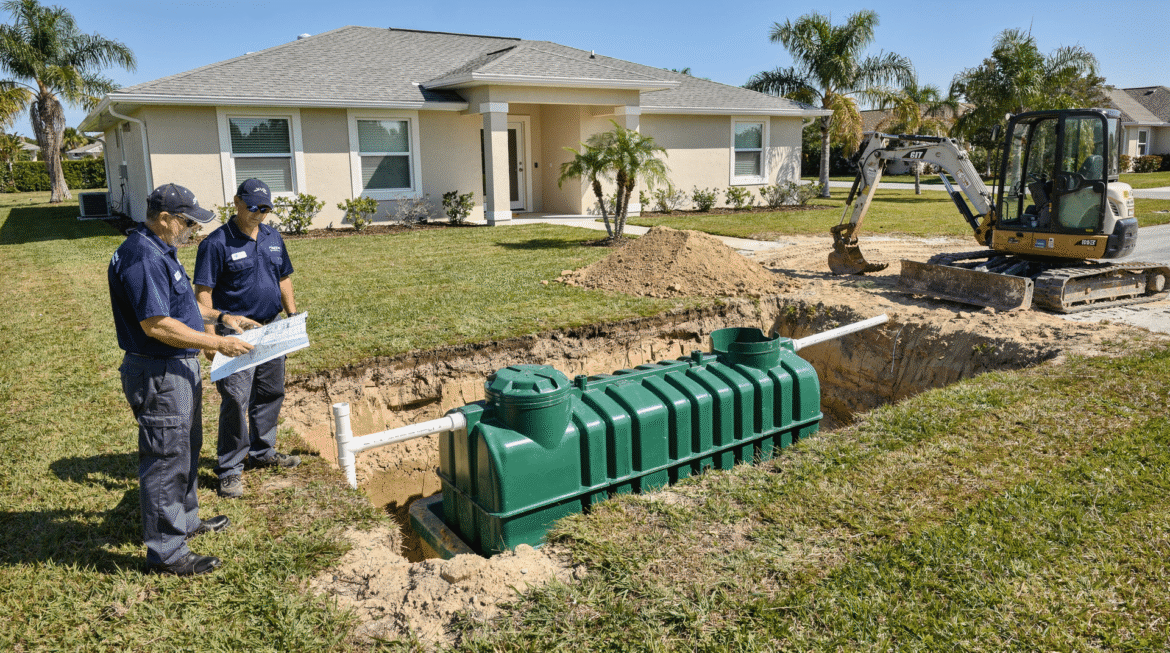
Installing a new septic system is one of the most important infrastructure decisions a homeowner can make. In Central Florida, soil composition, water table levels, property size, and local permitting requirements all influence how a septic system is designed and installed. Whether building a new home or replacing an outdated system, proper septic installation ensures long-term performance and compliance.
At Lapin Services, septic system installation is approached with careful planning, code compliance, and a focus on protecting both the property and the surrounding environment.
Understanding How Septic System Installation Works
A septic system installation begins with evaluating the property and soil conditions. In Central Florida, sandy soil and fluctuating groundwater levels play a significant role in determining tank placement and drain field design. The process typically includes soil testing, system sizing based on household occupancy, engineering design approval, and coordination with local permitting authorities.
Proper installation ensures wastewater is safely treated and dispersed while protecting nearby groundwater and neighboring properties.
Soil Conditions and Drain Field Planning in Florida
Florida soil presents both advantages and challenges for septic systems. Sandy soil allows for efficient drainage, but high water tables can create saturation risks if systems are not properly elevated or designed. Drain field placement must account for slope, property boundaries, and required setback distances.
Professional planning prevents future issues such as premature drain field failure or groundwater contamination.
What Impacts the Cost of a New Septic System
Several factors influence the cost of septic system installation in Central Florida. These include system size, property accessibility, soil quality, tank material selection, and drain field configuration. Larger homes require larger systems, and properties with challenging terrain or high groundwater may require additional design considerations.
Investing in proper installation upfront reduces the risk of expensive repairs or early system replacement later.
Replacing an Old or Failing Septic System
When an older septic system fails beyond repair, replacement may be necessary. Signs that replacement is required include repeated backups, persistent drain field saturation, structural tank damage, or systems that no longer meet current regulations.
Replacing a septic system involves removing or decommissioning outdated components and installing a modern system that complies with today’s safety and environmental standards.
Choosing an Experienced Local Installation Provider
Septic installation requires coordination between property owners, contractors, engineers, and local inspectors. Working with a provider familiar with Central Florida codes and environmental conditions helps streamline the process and avoid unnecessary delays.
A properly installed septic system provides decades of reliable service when designed and maintained correctly. If you are planning new construction or replacing an aging system, professional consultation ensures the project starts on solid ground.

Related Articles
-

Warning Signs Your Septic System Is Failing (And What to Do Next)
-
Septic System Repair in Orlando: Common Problems and Professional Solutions
-
Septic Inspections in Central Florida: When You Need One and What Inspectors Look For
-
Septic Pumping Services in Orlando: How Often, Why It Matters, and What to Expect