
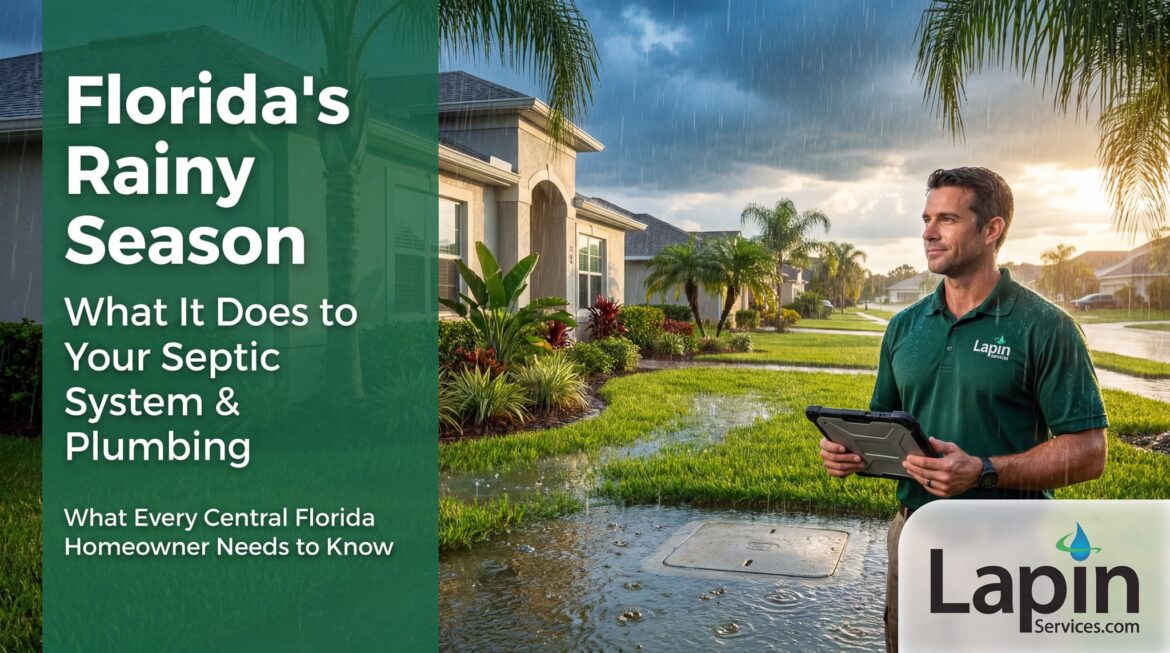
Florida’s rainy season runs from June through September, and for most of the state it arrives with little subtlety. Afternoon thunderstorms roll in daily, tropical systems push heavy rainfall inland, and Central Florida — already sitting at or near the water table in many areas — absorbs month after month of saturating precipitation. For homeowners on septic systems, this seasonal pattern creates a specific set of risks that don’t exist during the dry months, and understanding them is the difference between a system that weathers the season and one that ends it with an expensive repair.
The short answer to whether rain affects your septic system is yes — significantly and in multiple ways. The longer answer is worth understanding before the season starts, not after the first problem appears.
Why the Rainy Season Is Hard on Septic Systems
The core issue is water table. Florida’s water table is already elevated compared to most other states, and in low-lying areas of Orange, Seminole, Osceola, and Lake counties, it can sit just a few feet below the surface even during dry months. When the rainy season arrives and inches of rainfall accumulate week after week, that water table rises further — sometimes dramatically. In some areas, it reaches the level of the drain field.
That’s where the problem starts. Your septic drain field works by dispersing treated effluent from the tank into the surrounding soil, where it undergoes final treatment and eventually joins the groundwater supply. The soil has to have somewhere to receive that effluent. When the water table rises high enough to saturate the drain field area, the soil loses its capacity to absorb anything. Effluent from the tank has nowhere to go, pressure builds in the system, and the result is sewage backing up into the home through the lowest drains — typically a ground-floor toilet, shower, or floor drain.
This isn’t a sign that the system is broken in the mechanical sense. It’s a sign that the system is being overwhelmed by conditions it wasn’t designed to handle continuously. But the practical experience for the homeowner is identical to a failure: sewage in the house, an inoperable plumbing system, and an urgent need for professional service.
Beyond the water table, saturated ground also means that surface water — runoff from heavy storms, pooling in the yard, drainage from roofs and driveways — has fewer places to go. If any of that surface water is finding its way toward the septic tank or drain field, it compounds the problem. A tank being infiltrated by groundwater or surface water takes in far more liquid than it was designed to process, accelerating the cycle of overload.
The Signs Your Septic System Is Struggling After Heavy Rain
The most obvious sign is sewage backup, but the rainy season produces subtler warning signals worth recognizing before things reach that point. Watch for:
- Slow drains throughout the house — not just one fixture — during or immediately after heavy rainfall, which typically indicates the drain field is temporarily saturated
- Gurgling sounds from toilets and drains, indicating air trapped in a system where normal drainage is restricted
- Standing water or unusually wet, spongy ground over or near the drain field during rain events that don’t produce similar pooling elsewhere in the yard
- Sewage odors near the drain field or around the tank access lids after heavy rain — a properly functioning system shouldn’t produce outdoor odors regardless of weather
Water that sits for days after the rain stops — particularly if it carries any odor — points to a drain field that can no longer adequately absorb effluent. When odors appear, something in the system is under enough stress that gases are escaping through saturated soil, through lids that have shifted, or through a tank that’s overloaded.
Hurricane and Tropical Storm Risk
Central Florida doesn’t sit on the coast, but it sits directly in the path of weather systems that make landfall elsewhere and push inland with enormous amounts of rainfall. Hurricane Ian in 2022 is a clear example — its rainfall impact on Orange and Osceola counties caused septic damage well away from any coastal surge. The compounding effect of multiple inches of rain in a short window, followed by prolonged ground saturation, can overwhelm systems that handle ordinary summer rain without issue.
The specific risk from tropical weather events is that the damage isn’t always immediately visible. A tank that gets infiltrated by floodwater, a drain field that gets physically disrupted by saturated soil shifting, or a system lid that gets displaced by storm activity may not produce obvious symptoms until days or weeks after the storm passes. If your property experienced significant flooding or storm water intrusion near the septic area, a professional inspection after the event — not just a wait-and-see approach — is the right call.
How to Protect Your System During the Wet Season
The most effective protection is preparation before the rainy season starts, not response after something goes wrong. If your tank is overdue for pumping, schedule it in the spring. A tank that enters June with elevated sludge levels has far less capacity to buffer the increased liquid load the rainy season brings. A freshly pumped tank has maximum headroom to handle that additional stress without backing up.
Beyond pumping, the most important thing you can do is manage where water goes on your property:
- Check that gutters and downspouts are directing roof drainage away from the septic area
- Identify any areas where surface water naturally flows toward the drain field — low spots, sloped lawns, drainage channels — and consider redirecting them
- Keep the drain field area clear of anything that would impede drainage: no parking, no heavy equipment, no new landscaping installations during wet season
Inside the house, moderating water use during extended periods of heavy rain genuinely helps. Running the dishwasher, washing machine, and multiple showers in the same few hours sends a large volume of water into a system that’s already under strain from outside. Spreading out water-intensive activities during sustained rain events gives the system more time to process each input before the next one arrives.
If you have a septic pump or aerobic treatment system with mechanical components, make sure those components are in working order before the season starts. A pump that’s running weakly or intermittently during dry weather will fail under wet-season load. A routine service check in April or May costs a fraction of an emergency call in July.
Rainy Season Plumbing Considerations Beyond the Septic System
For homes connected to municipal sewer, the rainy season brings its own plumbing risks. Heavy, sustained rainfall can infiltrate aging sewer laterals — the underground pipes that run from your home to the municipal main — through cracks or failed joints, increasing system load and potentially contributing to backups. If your neighborhood has older infrastructure and you’ve experienced drain slowdowns during heavy rains before, a camera inspection of your lateral line is a reasonable step to take before the season starts.
Roof drainage and foundation drainage deserve attention as well. Improperly graded lots or clogged gutters can direct large volumes of water toward the home’s foundation, where it finds its way into basements, crawlspaces, or through foundation cracks. Florida’s flat topography means water has nowhere to go quickly — it pools, saturates, and finds the path of least resistance, which is sometimes into the home rather than away from it.
Outdoor drain systems — including stormwater drains, French drains, and retention areas — should be clear of debris and functioning before June. A clogged storm drain that overflows during a routine afternoon thunderstorm is a manageable nuisance. The same drain clogged during a tropical weather event becomes a serious problem.
Frequently Asked Questions
Why does my septic system back up after heavy rain?
Heavy rainfall raises the water table, which can saturate the drain field and prevent it from absorbing effluent. When the drain field can’t absorb, liquid backs up through the system and into the home through the lowest drains. This is one of the most common septic problems in Central Florida during the June–September rainy season.
How can I tell if my drain field is saturated versus actually failed?
Saturation typically resolves within a few days after the rain stops and the water table drops. If the symptoms — slow drains, outdoor odors, wet ground over the drain field — persist well after the weather clears, or if you’re experiencing backup during normal rain rather than only extreme events, the system warrants a professional inspection to determine whether there’s underlying damage.
Should I pump my septic tank before rainy season?
Yes, if you’re approaching your normal pump interval. A tank with more available capacity handles the increased liquid load of the rainy season better than one nearing capacity. Spring is the ideal time to schedule a pump-out before summer conditions arrive.
Does hurricane season damage septic systems in Central Florida?
Yes. Significant rainfall from tropical systems can cause rapid water table rises and ground saturation that overwhelm drain fields. Flooding near the tank or drain field can cause structural damage or system displacement. A post-storm inspection is a good practice if your property experienced significant flooding near the septic area.
Can I use my plumbing normally during heavy rain if I’m on septic?
Normal use is generally fine, but moderating high-volume activities — laundry loads, long showers, running multiple appliances at once — during sustained heavy rain events reduces the liquid load entering an already-stressed system. The goal is to avoid adding internal pressure to a system that’s already dealing with external pressure from saturated soil.
How often should I have my septic system inspected in Florida?
Annual inspections are reasonable given Florida’s climate conditions. At minimum, a professional evaluation every 2 to 3 years alongside your regular pump-out schedule helps catch developing problems before the rainy season stress exposes them.
Don’t Wait for a Wet Summer to Find Out Your System Has a Problem
The rainy season doesn’t create septic problems so much as it reveals ones that were already developing — reduced drain field capacity, sludge buildup that limits tank headroom, aging components that function adequately in dry conditions but can’t handle wet-season load. The homeowners who get through summer without incident are generally the ones who took care of the system in the spring.
If your Central Florida home hasn’t had a septic inspection or pump-out recently, or if you experienced any drainage issues during last year’s rainy season, now is the time to schedule a service call — before June arrives. Lapin Services serves Orlando and the surrounding region with licensed septic maintenance, inspection, pumping, and repair.
Contact Lapin Services today to get your system ready for Florida’s rainy season.