If your home runs on a septic system, what goes down your drains matters far more than most people realize. Unlike a municipal sewer connection — where waste travels to a treatment facility designed to handle a wide range of materials — a septic system is a contained, biological environment. It depends on a delicate balance of bacteria, water flow, and physical capacity to function. Introduce the wrong materials, and that balance breaks down. Do it repeatedly, and the damage compounds quietly underground until the repair bill makes itself known.
The good news is that most septic-related problems caused by flushing or draining the wrong things are entirely preventable. Knowing what doesn’t belong in the system is the first step.
The Core Problem: What Your Septic Tank Can and Can’t Handle
Your septic tank works by separating waste into three layers:
- Solids sink to the bottom and form sludge.
- Fats and oils float to the top as scum.
- Effluent — the liquid layer in the middle — flows out to the drain field for further treatment by the soil.
Beneficial bacteria living in the tank break down organic solids over time, keeping the sludge layer manageable between pump-outs.
That process only works when the materials entering the tank are ones the system was designed for: human waste and toilet paper. Everything else either disrupts the bacterial environment, accumulates as solids that won’t break down, or physically clogs pipes, baffles, and drain field lines. Some materials do all three.
What Never Belongs in a Septic-Connected Drain
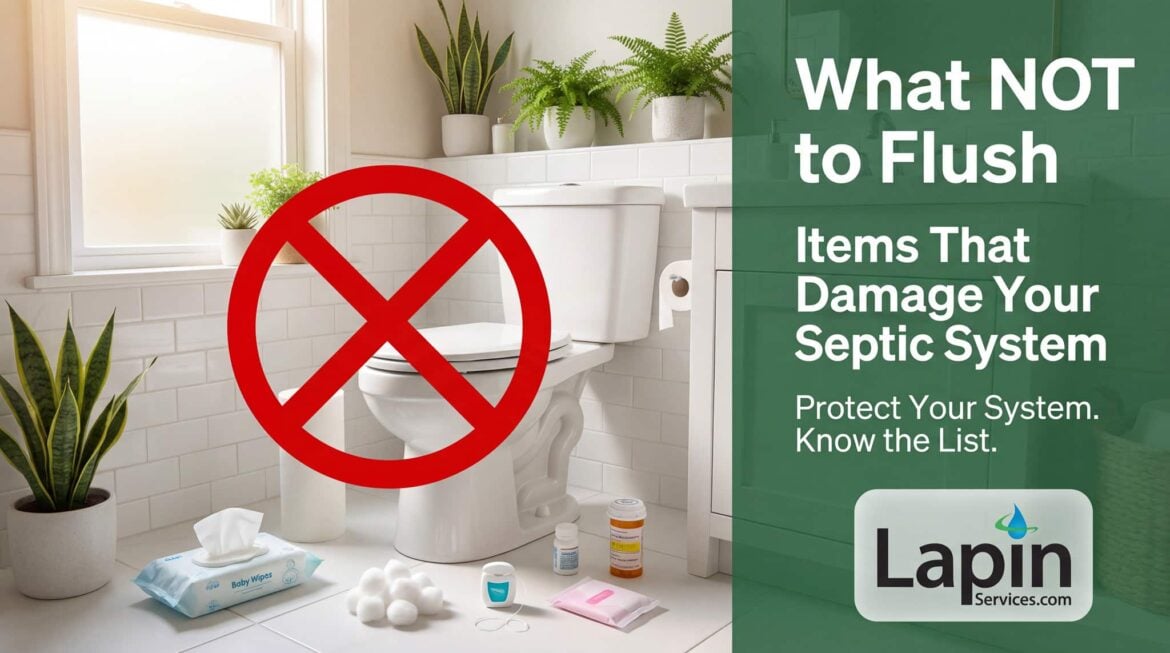
The most damaging category is items that are marketed as flushable but aren’t — at least not for septic systems. Flushable wipes are the most common offender. Unlike toilet paper, which is engineered to disintegrate in water quickly, wipes hold their structure. They move through the toilet and into the tank, where they accumulate as solids that bacteria can’t break down. Over time they clog the inlet baffle, the outlet, and in some cases make their way into the drain field, where they restrict absorption. The same applies to paper towels, facial tissues, and cotton balls — all of which people flush regularly without realizing the consequences.
Feminine hygiene products are another major contributor to septic damage across Central Florida homes. Tampons and pads are designed to absorb and expand, which is exactly the opposite of what you want inside a pipe or tank. They don’t break down, they don’t compress, and they accumulate into blockages that require professional intervention to clear.
Grease and cooking oils deserve their own conversation because homeowners tend to underestimate the damage they cause. Grease poured down a kitchen drain seems liquid in the moment, but it cools and solidifies inside pipes and along the walls of your tank. Over time it builds up into a thick scum layer that crowds out the biological activity your system depends on and eventually restricts flow. This includes cooking oils, bacon grease, butter, and any fat-heavy food residue rinsed directly into the sink.
Medications are a less obvious but genuinely harmful addition to septic systems. Prescription drugs, over-the-counter medications, and vitamins flushed down the toilet introduce chemical compounds that disrupt or kill the bacterial colonies your tank requires. A healthy bacterial population is what prevents your sludge layer from overwhelming your system between pump cycles. Introduce enough antibiotics or other compounds and you’re essentially sterilizing the environment your septic system depends on to function.
Household chemicals — paint, solvents, pesticides, pool chemicals, and similar products — are a version of the same problem but more acute. These substances are toxic to the microbial environment in the tank and can leach through the drain field into the surrounding soil and groundwater. In Florida, where the water table is high and the soil is permeable, the environmental risk is especially significant. Dispose of these materials through your county’s hazardous waste program, not through your drains.
Chemical drain cleaners fall into a category homeowners often don’t think to question. When a drain is slow, the instinct is to reach for a bottle of liquid drain cleaner. For homes on septic systems, that instinct causes more problems than it solves. The caustic chemicals that dissolve a clog also kill the beneficial bacteria in your tank and can corrode older pipe materials over repeated use. A better approach for a slow drain in a septic-connected home is to call a plumber for professional drain cleaning — hydro jetting clears the obstruction without introducing anything harmful into the system.
Cat litter — including brands labeled as septic-safe or biodegradable — should never be flushed. Most litter is designed to clump when it contacts moisture, which is precisely what it will do inside your pipes. Even litter made from natural materials adds solids to your tank that break down slowly and accumulate faster than your system can manage them.
The Toilet Paper Question
Not all toilet paper is equal when you’re on a septic system. Single-ply breaks down significantly faster than two- or three-ply options and is generally the better choice for septic-connected homes. That said, the brand and ply matter less than the volume. Excessive toilet paper use — regardless of the type — adds to the solids load in your tank and shortens the interval between necessary pump-outs. If your household goes through large quantities, factor that into your maintenance schedule.
What This Means for Your Kitchen Drain
The kitchen sink is often more damaging to a septic system than the toilet, simply because homeowners don’t apply the same mental filter to it. Food scraps rinsed into the sink, coffee grounds poured down the drain, eggshells, starchy foods, and any form of cooking grease all add to the solids burden in your tank. Garbage disposals accelerate this dramatically — they grind food waste into fine particles that flow directly into the tank and accumulate as sludge far faster than a system without one. Homes with garbage disposals generally need septic pumping every one to two years rather than the standard three to five.
If you have a garbage disposal and a septic system, consider minimizing its use for anything beyond incidental rinsing. Compost food scraps where you can. And never use the sink as a grease disposal point, regardless of how much water you run with it.
Septic-Safe Products: What to Look For
Switching to septic-safe household products is one of the simplest things a homeowner can do to protect the system long-term. For cleaning products, look for biodegradable formulas without bleach as a primary ingredient — small amounts of diluted bleach from normal cleaning are generally tolerable, but concentrated use or frequent heavy application disrupts bacterial balance over time. The same applies to antibacterial soaps and disinfectant cleaners used heavily at the sink or in the bathroom.
For laundry, liquid detergents tend to be better for septic systems than powder — powders sometimes contain fillers that don’t dissolve fully and can accumulate in the tank. Look for products explicitly labeled as septic-safe, and avoid using more than the recommended amount.
The goal with product selection isn’t to overhaul your entire household routine — it’s to make informed choices about the items you use in high volume every day.
Frequently Asked Questions
Are flushable wipes really a problem for septic systems?
Yes, consistently and significantly. Despite the label, flushable wipes don’t break down the way toilet paper does. They accumulate in the tank and can clog the inlet baffle, the outlet, and drain field lines. They’re one of the most common contributors to preventable septic damage.
Can I use bleach if I’m on a septic system?
Moderate use — a small amount in a toilet bowl cleaner or a load of laundry — is generally tolerable for a healthy system. Pouring bleach directly down drains in large quantities, or using heavy concentrations of antibacterial cleaners regularly, can disrupt the bacterial population your tank depends on.
Is it okay to flush medications down the toilet?
Not if you’re on a septic system. Medications introduce compounds that can kill beneficial bacteria in the tank. Most counties in Central Florida have medication take-back programs or disposal kiosks at pharmacies — use those instead.
How does a garbage disposal affect a septic system?
It adds significantly to the solids load entering your tank, which shortens the time between required pump-outs. Homes with disposals typically need pumping every one to two years rather than every three to five.
What should I do if I’ve been flushing the wrong things for years?
Schedule a septic inspection and pump-out. A licensed technician can assess the current condition of the tank — sludge and scum levels, baffle condition, any signs of drain field stress — and tell you where things stand. Catching up on proper maintenance now is far less expensive than waiting for a system failure.
Small Habits, Long-Term Protection
A septic system that’s treated well can serve a Central Florida home for decades without major incident. Most of the failures we’re called to address at Lapin Services have a preventable origin — something flushed or poured down a drain that had no business being there. The system doesn’t send warning notices. It absorbs the damage quietly until the consequences become unavoidable.
The homeowners who avoid those calls are the ones who treat what goes down their drains as a deliberate choice, not an afterthought. That habit, combined with regular professional maintenance, is what keeps a septic system out of the repair column and working the way it should.
If your Central Florida home is overdue for a septic inspection or pump-out, or if you have questions about your system’s current condition, the team at Lapin Services is ready to help.
Contact Lapin Services today to schedule your septic service appointment.